
Description
Metallic Tulip Jacquard Fabric M5671
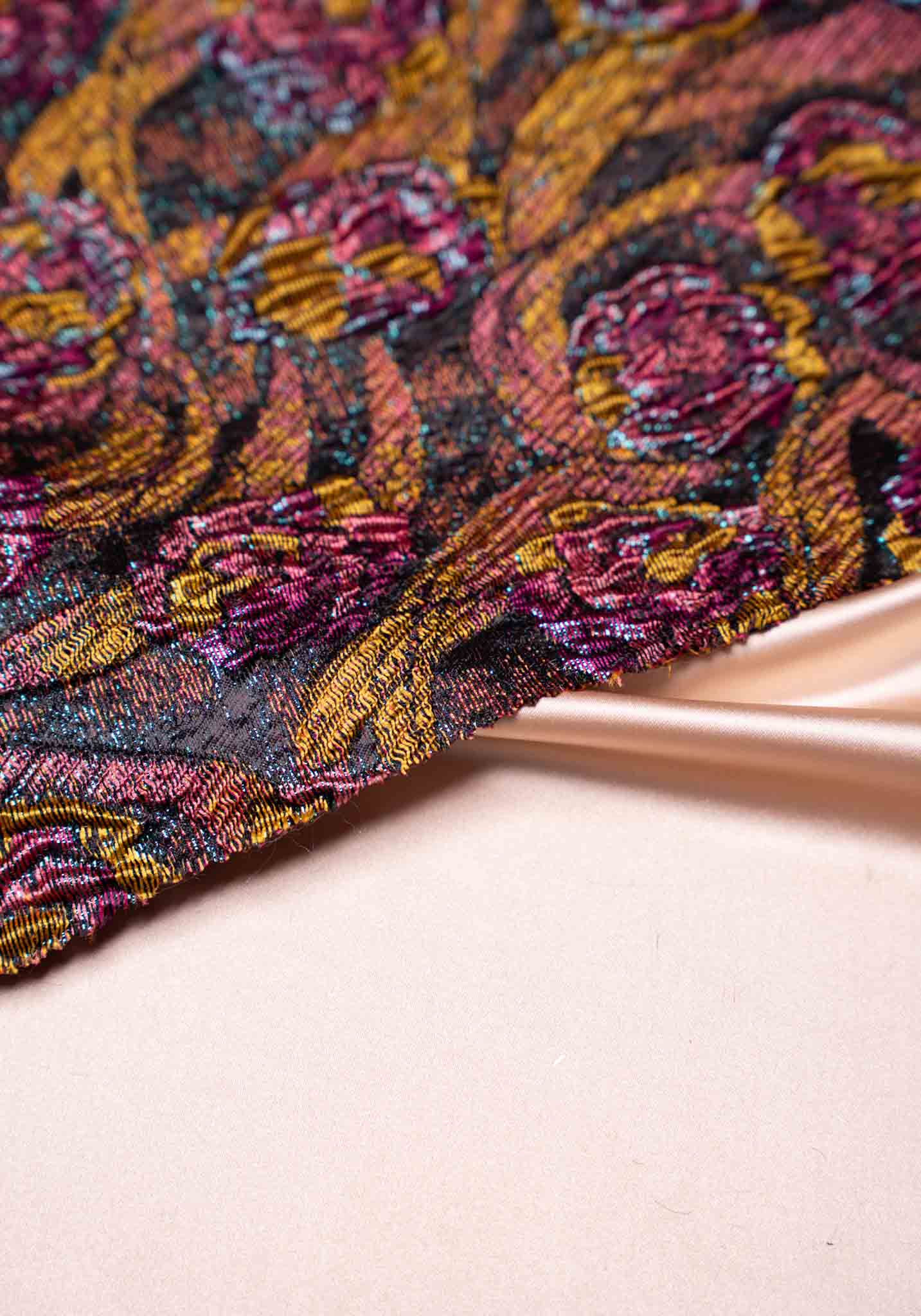
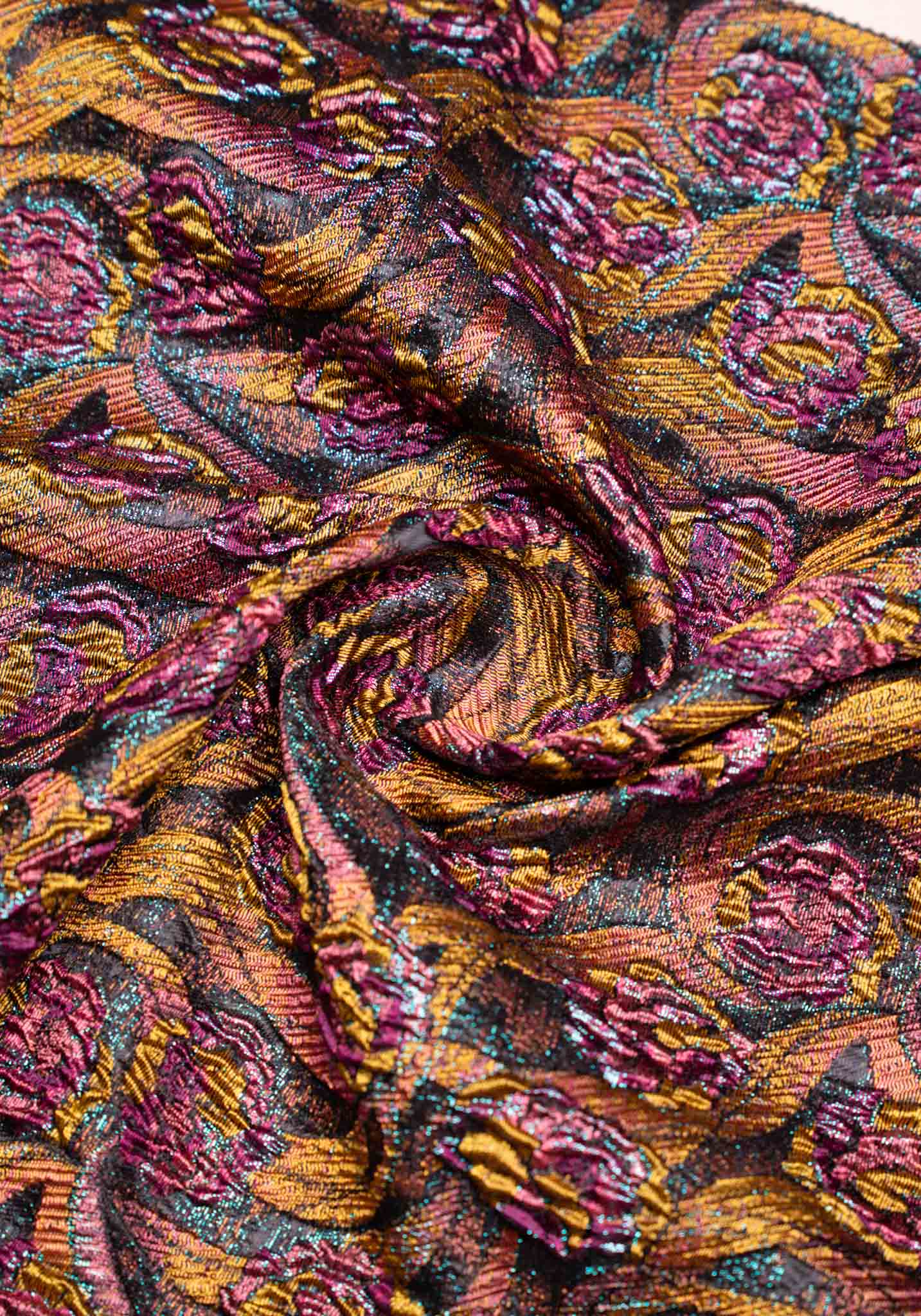
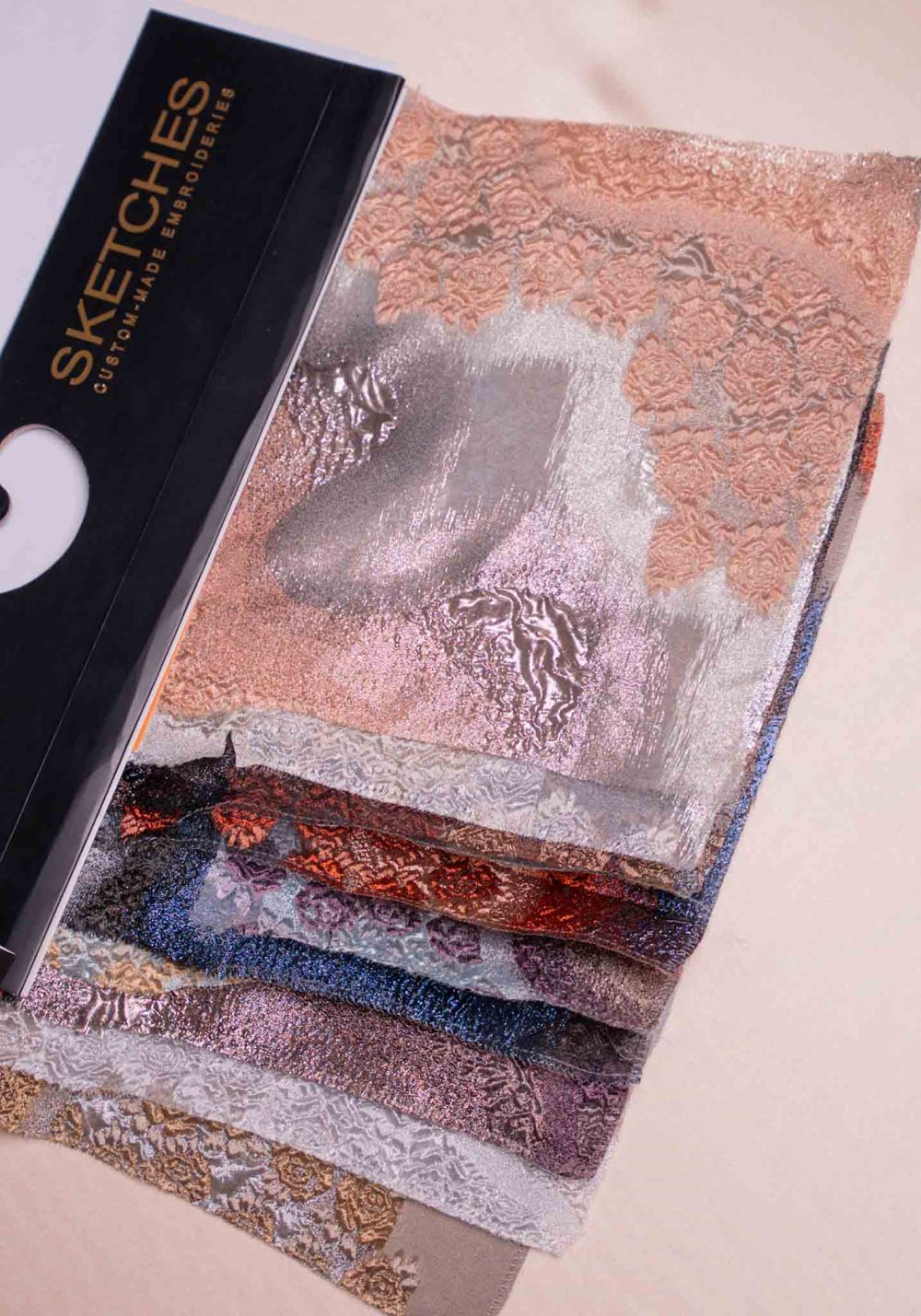
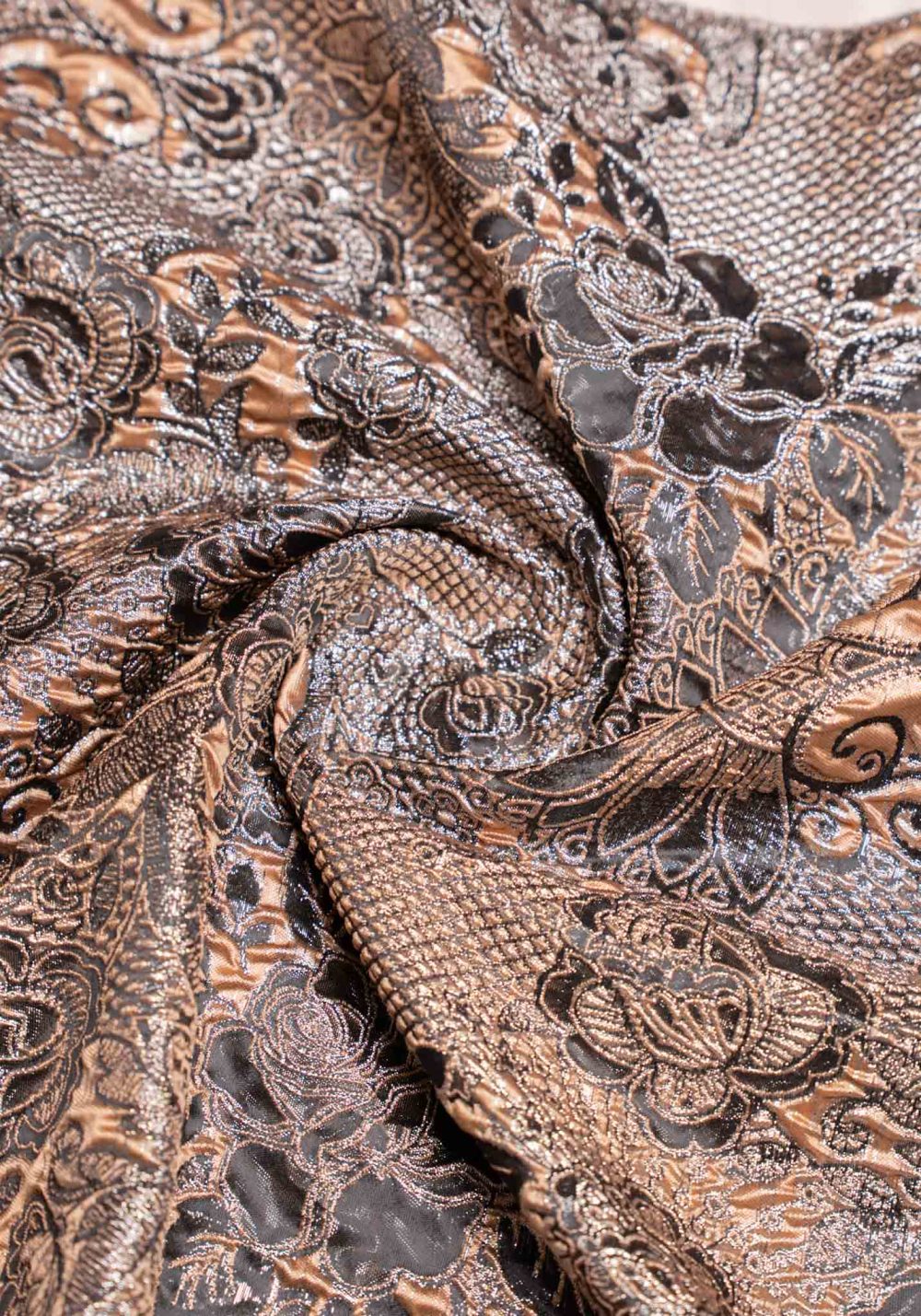
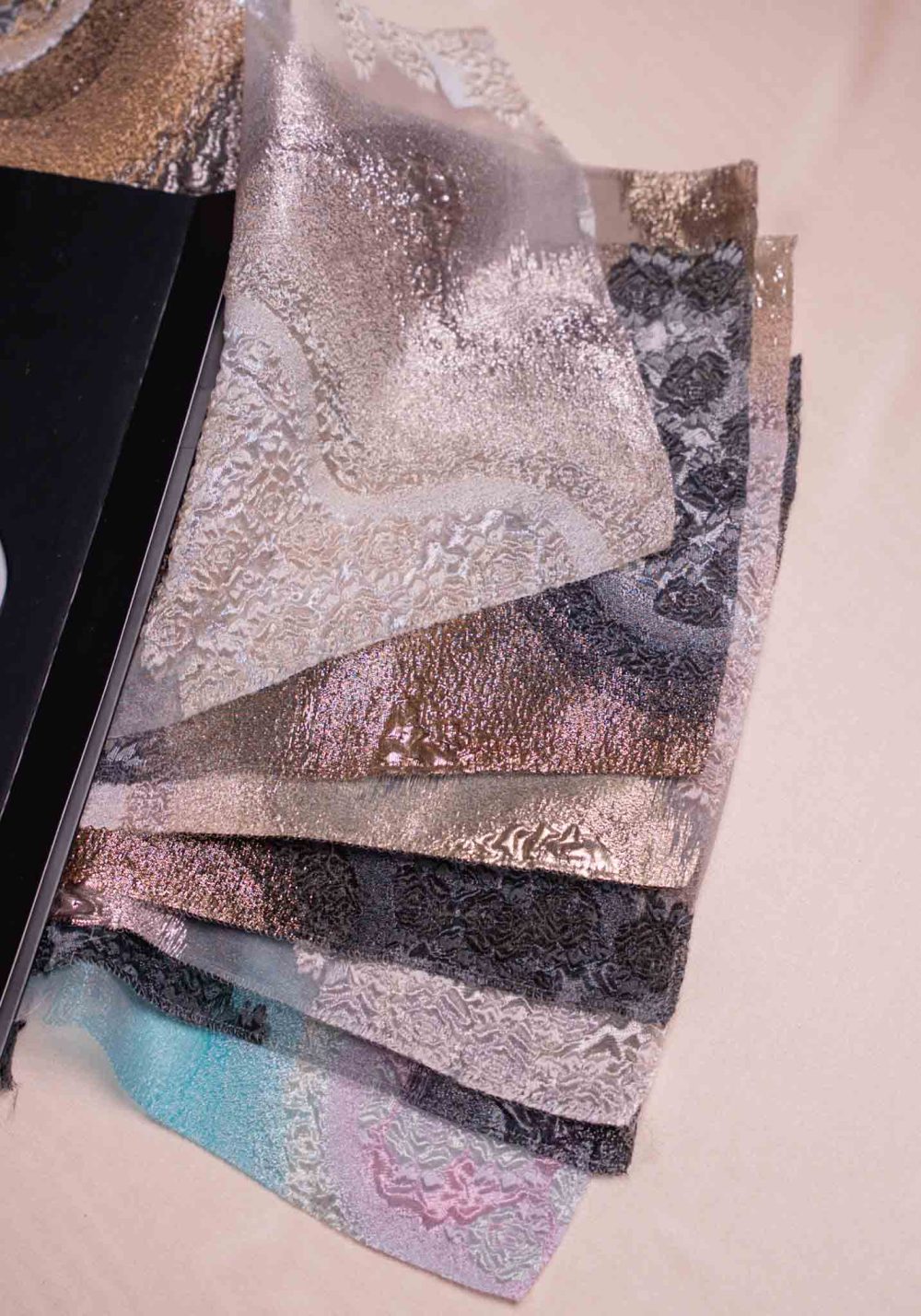
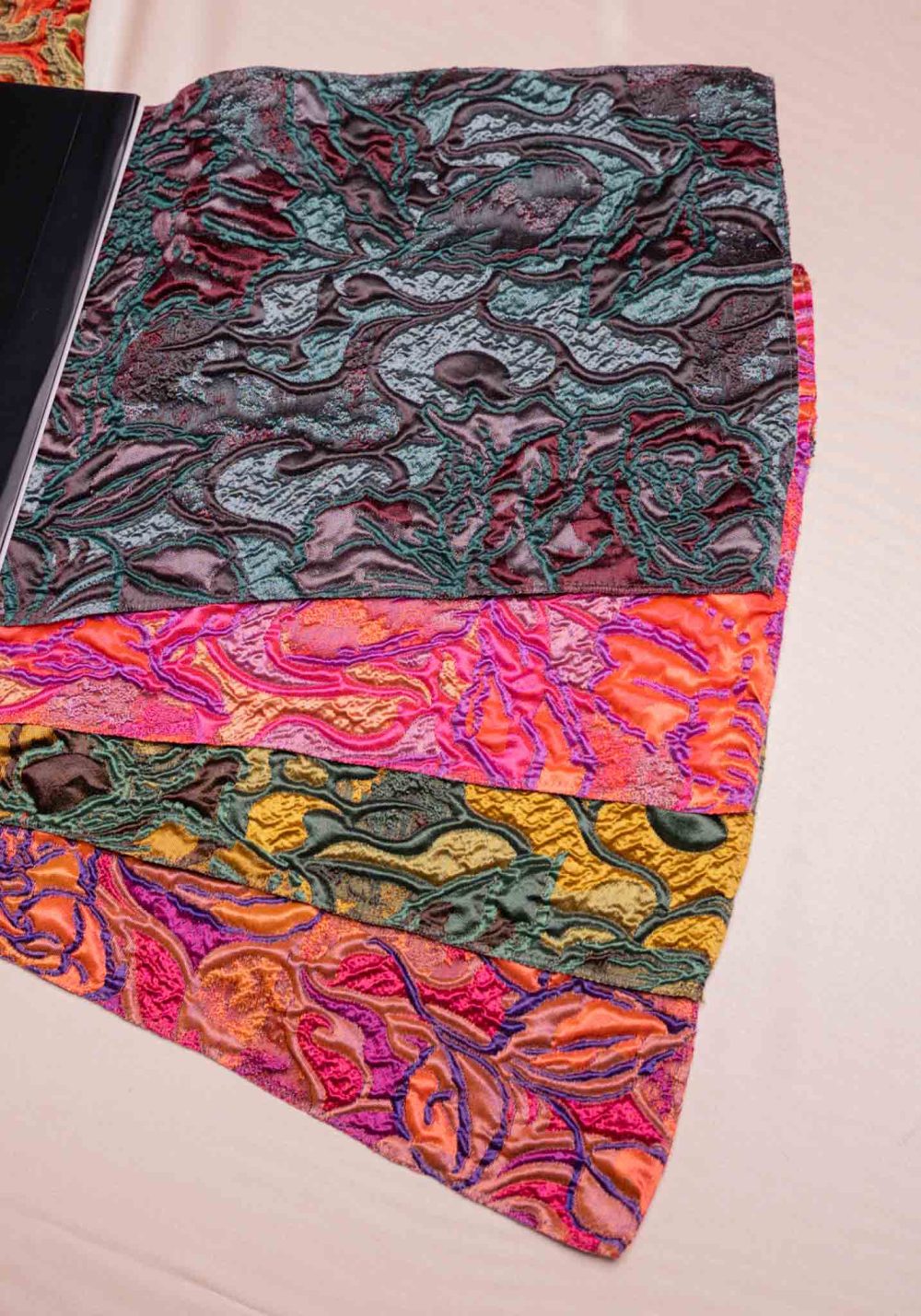
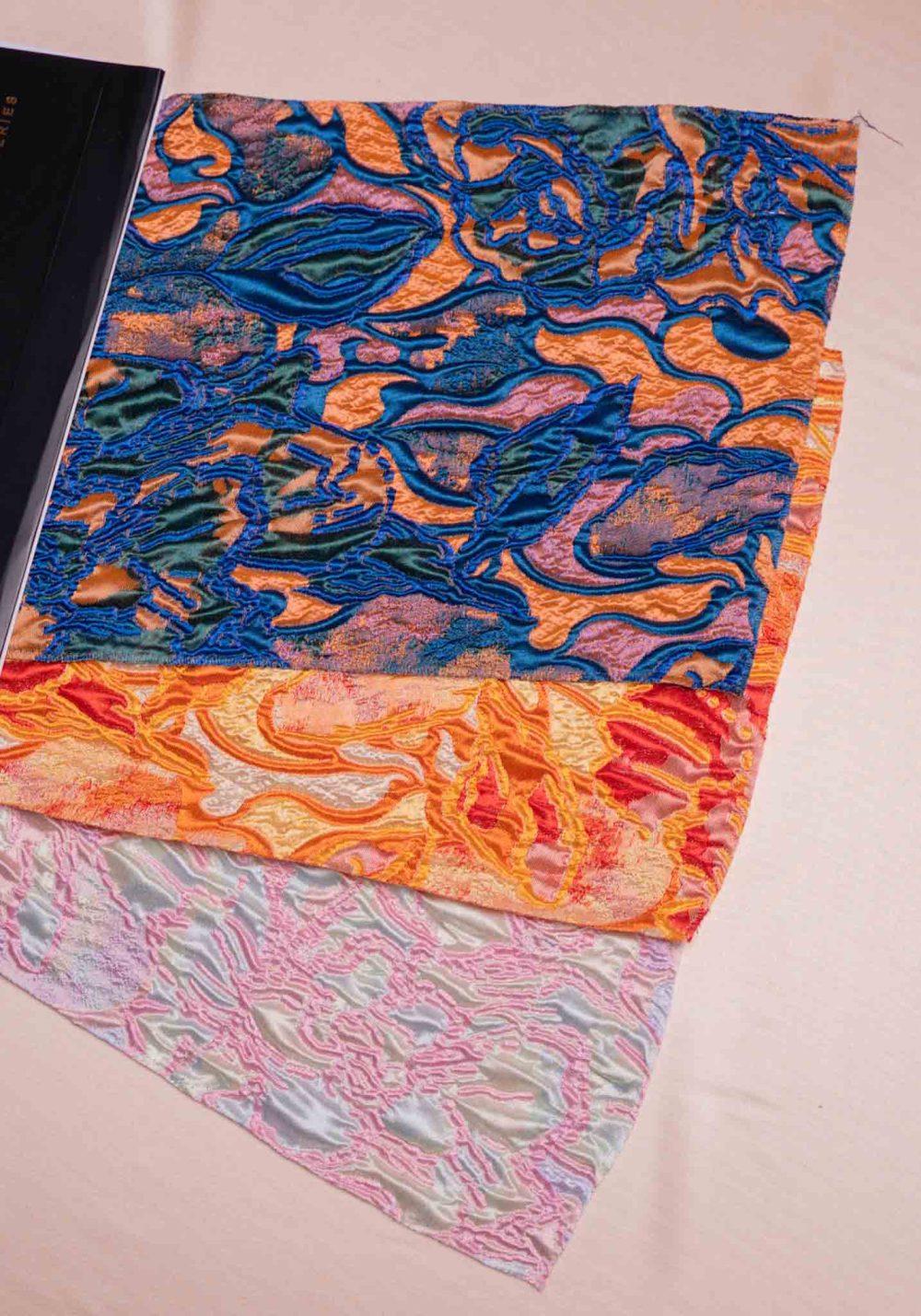
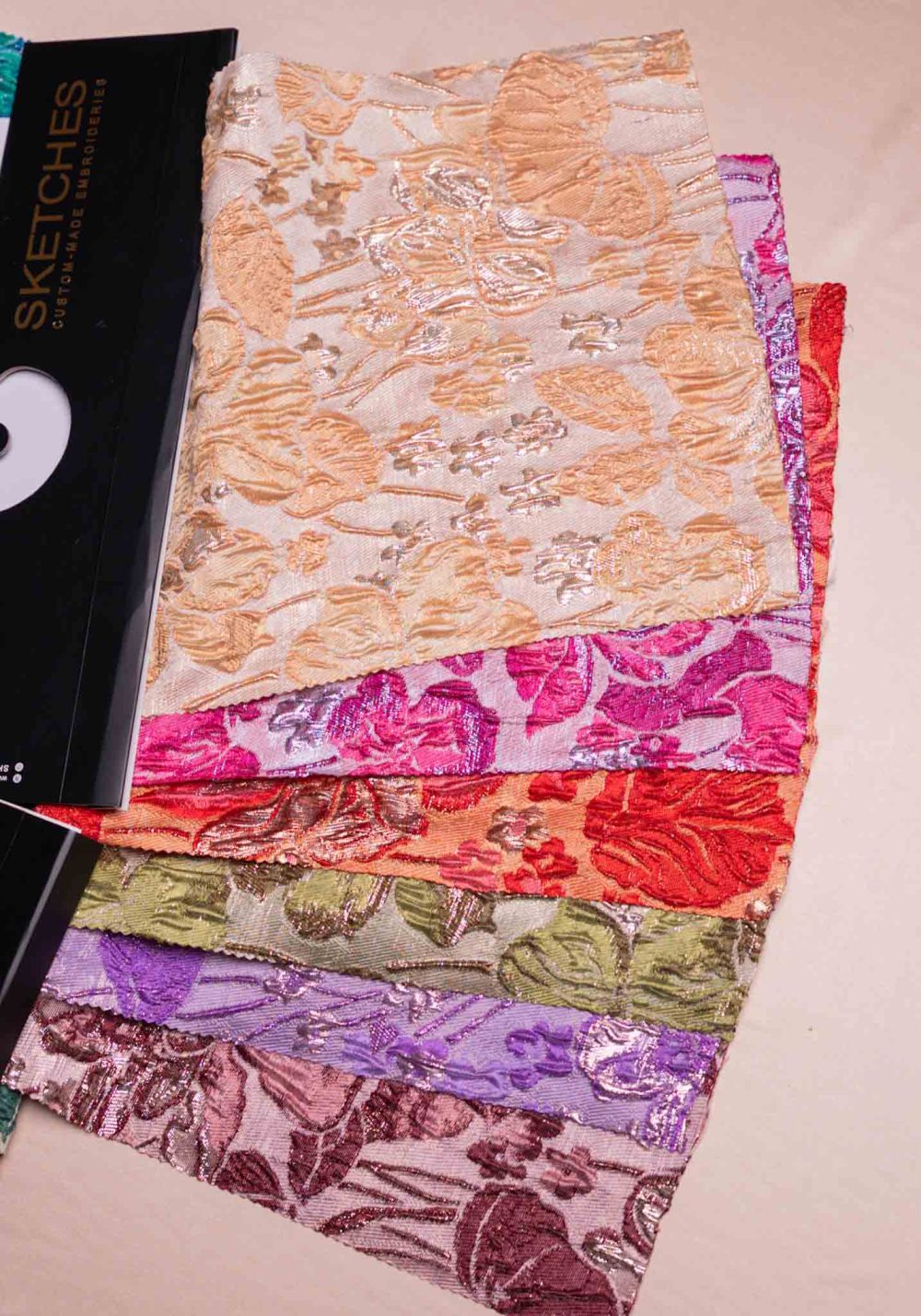
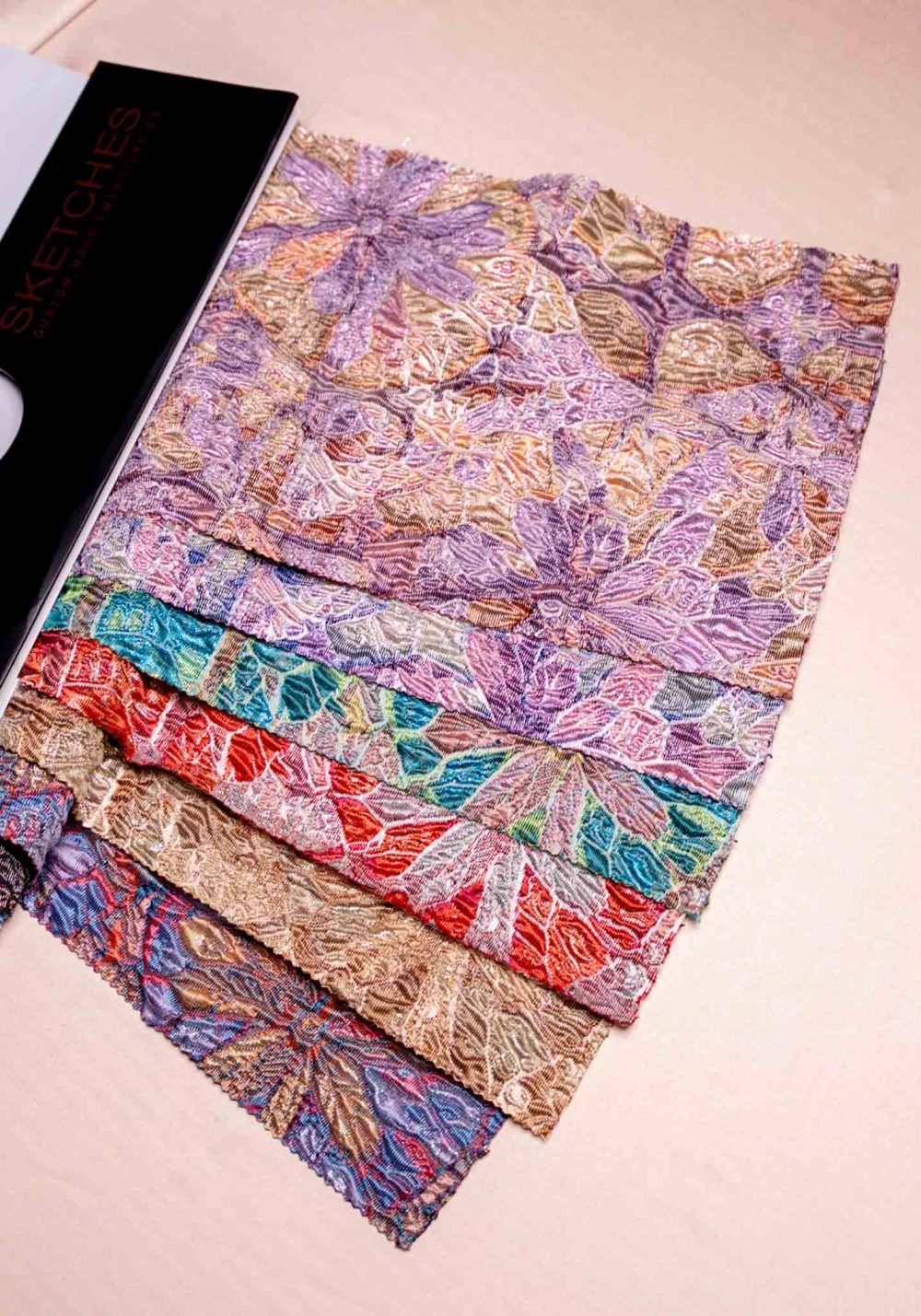
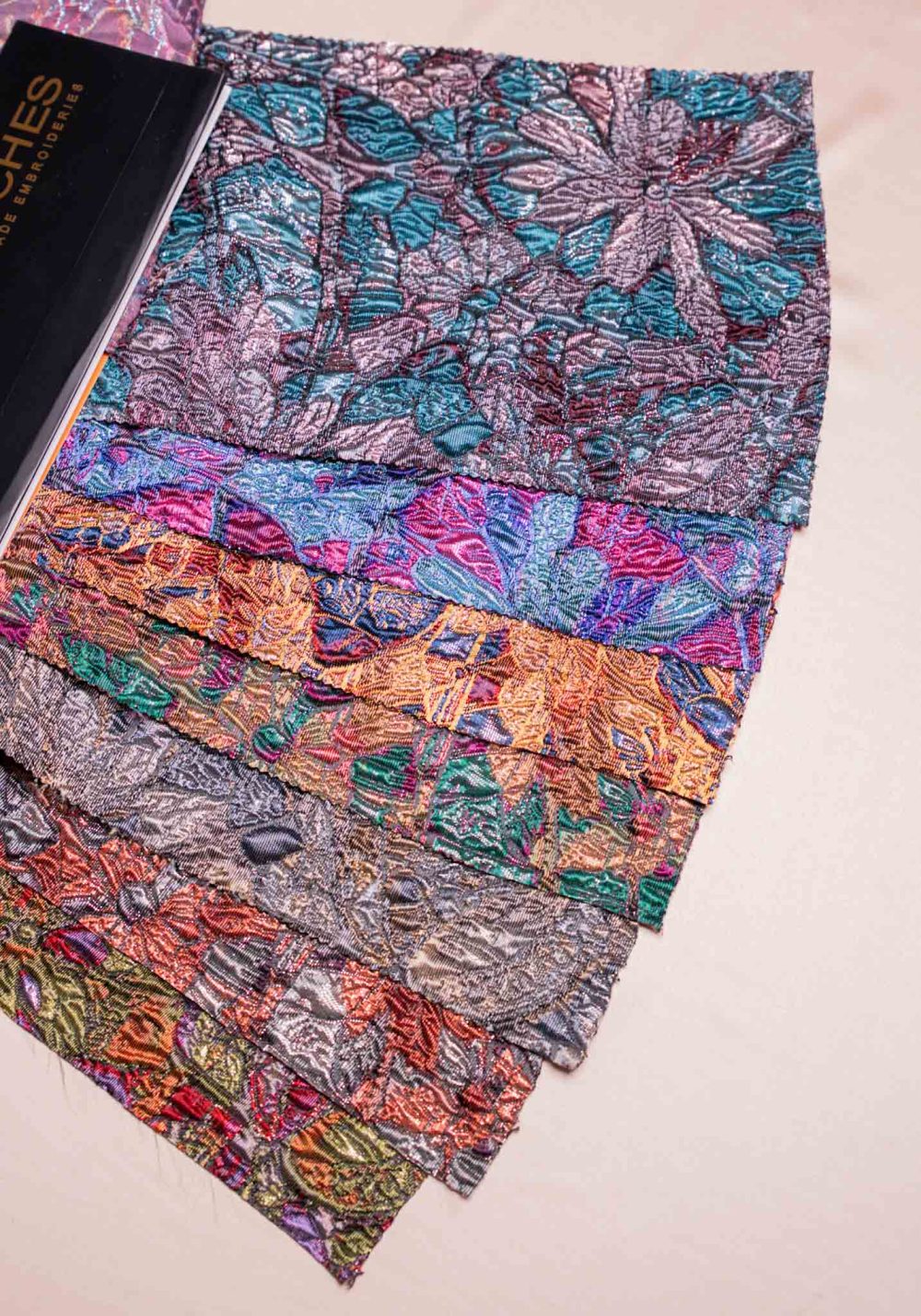
Metallic tulip jacquard fabric M5671 features raised tulip buds, wavy leaves and flowing branches. Bronze, olive-gold and fuchsia-burgundy tones give the woven floral design a warm contrast, with metallic threads adding highlights across the textured surface.
Main Features
Rich botanical and artistic design:
The fabric has an opulent artistic appearance and a remarkable presence thanks to its elevated Jacquard weave of blooming “Tulip Flowers” buds with wavy leaves and traditional flowing branches.
3D Jacquard texture:
Made with contemporary machinery utilizing dense, engraved Jacquard weaving processes, the fabric has a rich 3D texture thanks to the merging of raised tulip petal embroidery with bronze and gold metallic (Lurex) threads.
Warm and captivating color scheme:
The fabric’s royal combination of shiny bronze embroidery, olive gold, and warm fuchsia/burgundy tones adds visual depth and a breathtaking appearance under the lights.
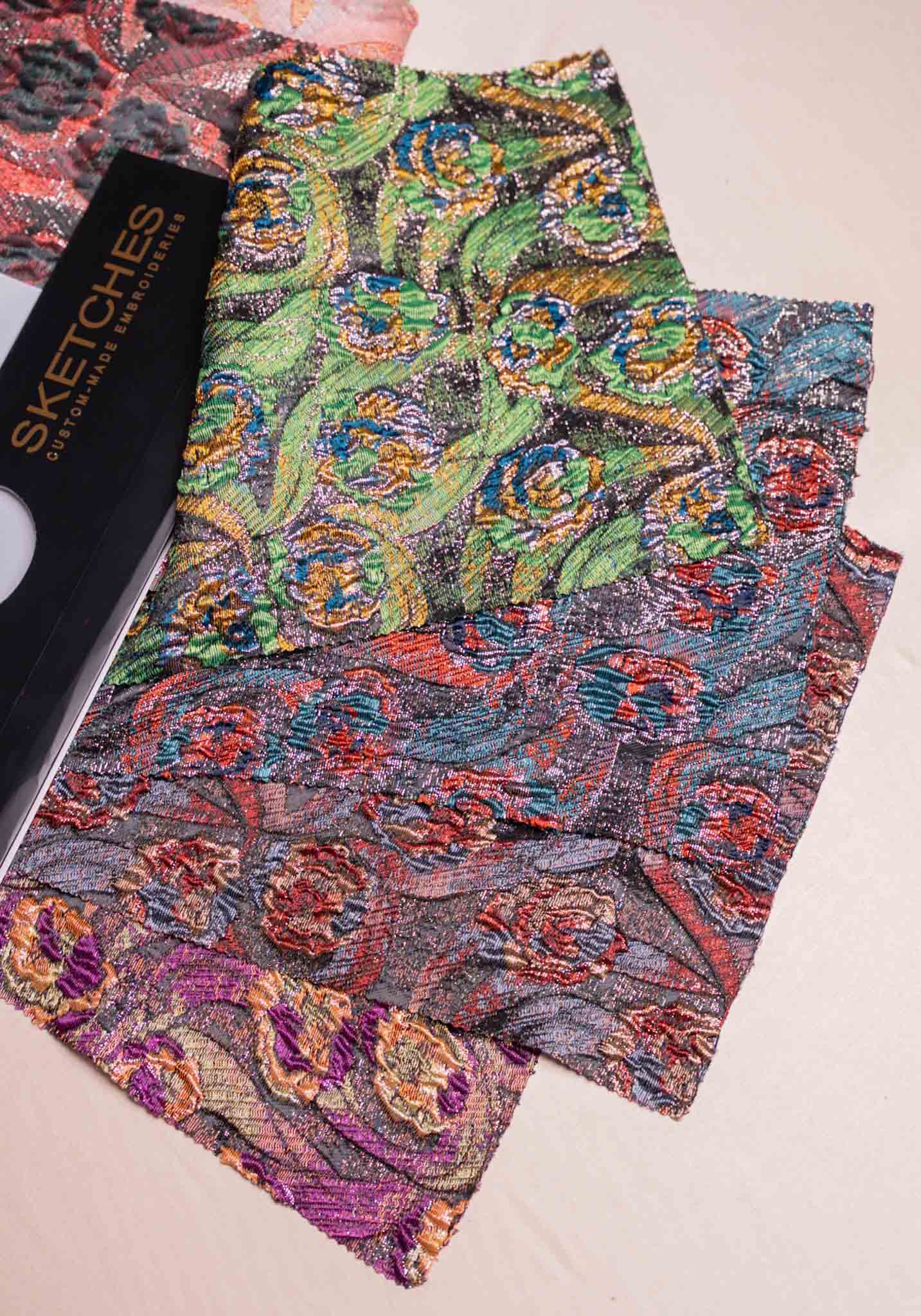
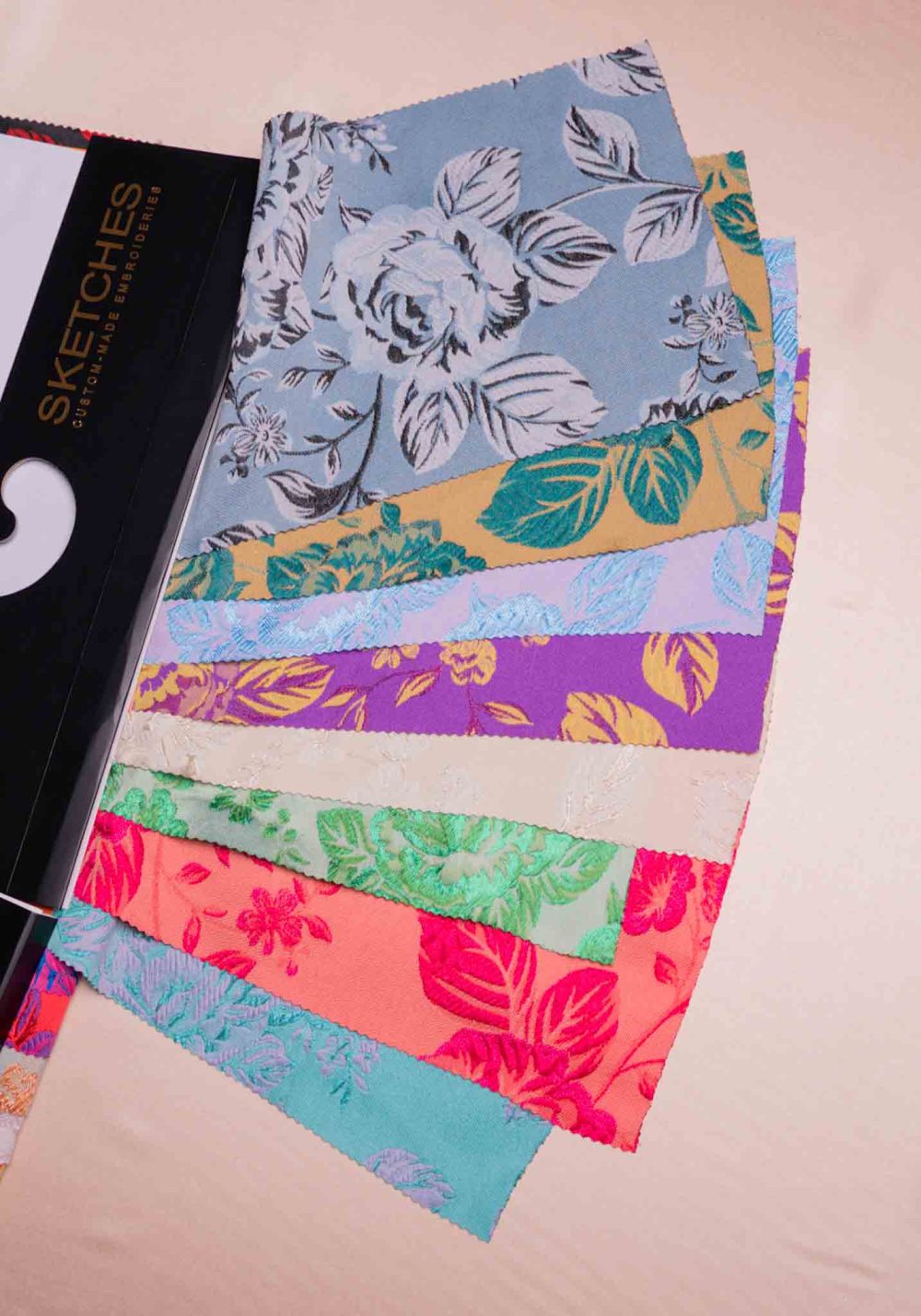
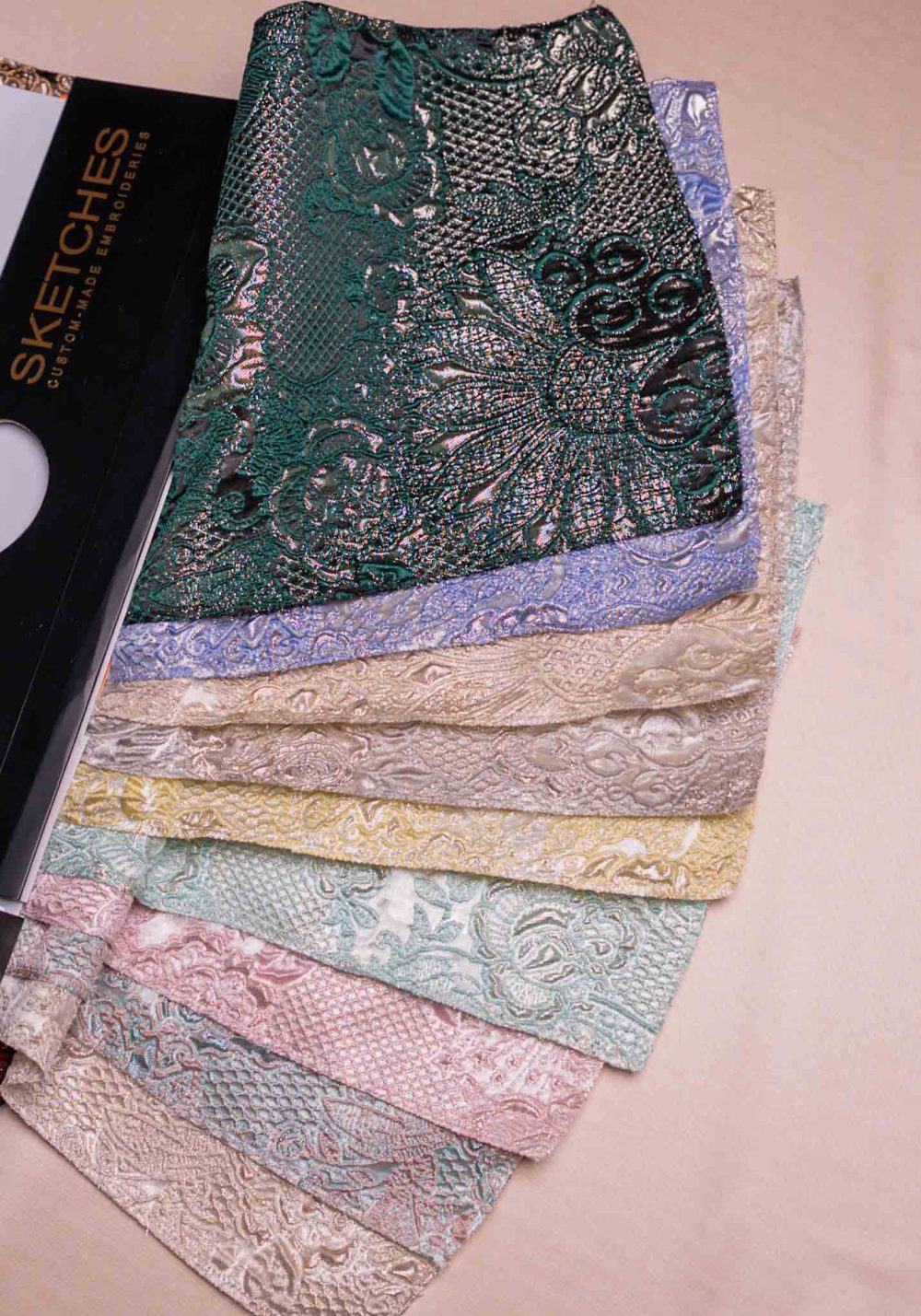
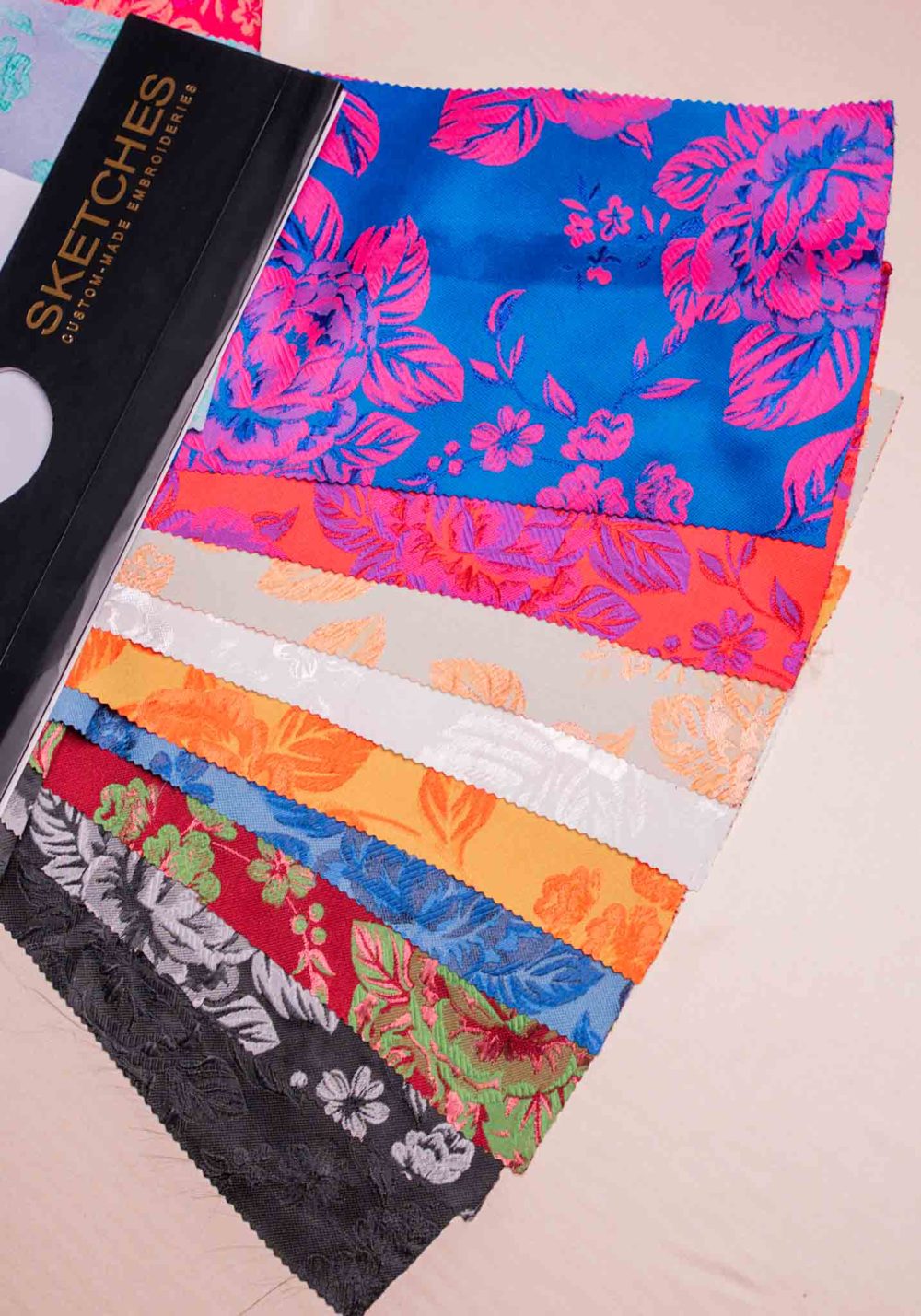
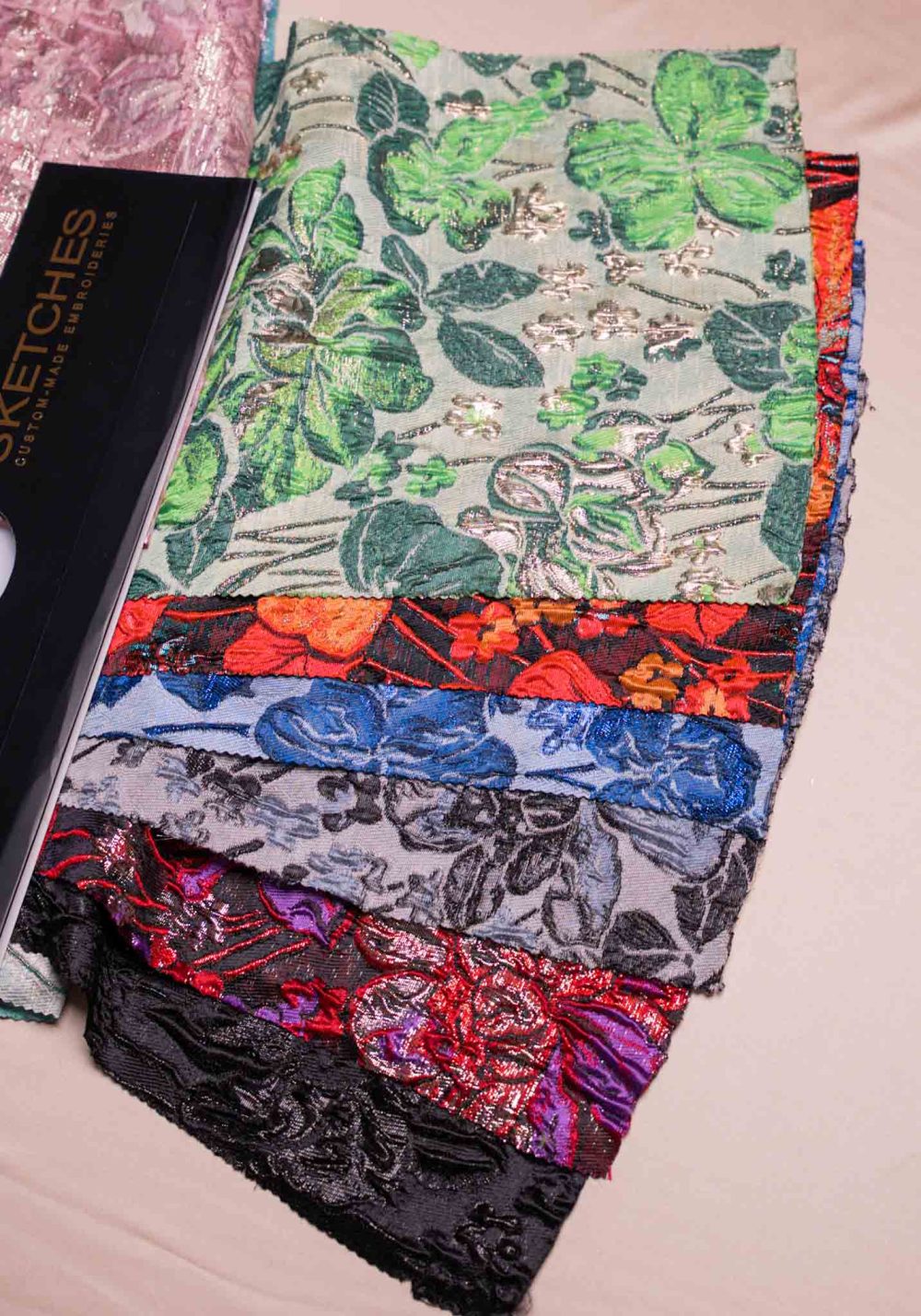
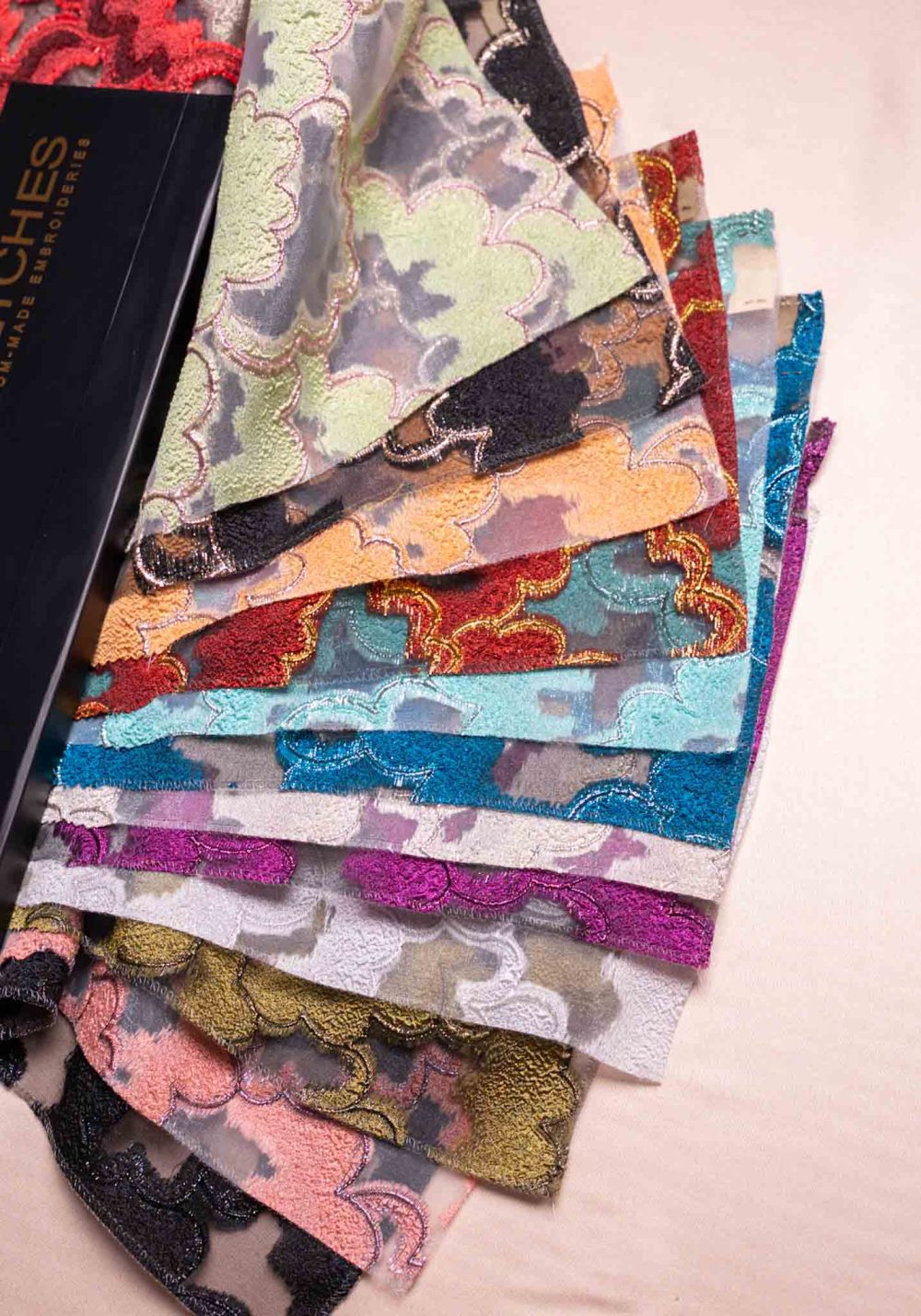
Designers can choose from a variety of premium color combinations for haute couture creations with this luxurious Jacquard (please check the sample images or contact us for available colors).
Guidelines
- Category:
Couture Fabric, Fashion Fabric
- Style:
Glamorous, High-Fashion, Artistic
- Season:
All-Season
Recommended For
-
Wedding dresses and unconventional, royal-inspired bridal reception gowns (Bridal Reception & Gala Gowns)
-
Red carpet outfits and elegant evening gowns (Red Carpet Wear)
-
Custom-made royal coats and jackets (Couture Evening Blazers & Coats)
-
Geometrically cut flared skirts (Statement Ball Gown Skirts)
Additional Tip:
Jacquard fabric is an excellent option for cuts that require structure and volume because of its robust and structured texture and the dense metallic threads used in the machine-embroidered and etched tulip motifs. To accentuate the richness of the fuchsia and bronze tones without compromising comfort, it is advised to wear it with a smooth satin lining in a nude or soft gold hue.
Price
List Price:
Contact us for a B2B quote and wholesale pricing.
Planning with metallic tulip jacquard fabric
Before cutting, review the motif layout against the garment pattern. Decide where the main decorative elements should sit at the neckline, waist and adjoining seams. Compare the front and back panels together, and allow for pattern placement when estimating the required quantity.
Assess a physical sample with the intended lining. The combined layers will influence coverage, colour and drape, so view them under daylight and occasion lighting. Photographs provide a guide to the design; screen settings and reflective details can change the apparent shade.
Order metallic tulip jacquard fabric M5671
Include reference M5671 and your required quantity when requesting a quote. Confirm usable width, complete fibre composition, available colourways, minimum quantities and delivery arrangements before production. Ask about sampling when accurate colour matching is essential.
Trial stitching and finishing on an offcut. Request product-specific care guidance before pressing or cleaning, and discuss support and fastening placement with your maker. Choose the construction method after assessing the actual material rather than relying on the photograph alone.
Discover more at Sketches Tekstil, or compare violet orchid jacquard fabric 9232. For general background, see the jacquard weaving overview. Enquire about metallic tulip jacquard fabric M5671 to confirm the details for your chosen colourway.
Assessing the woven pattern
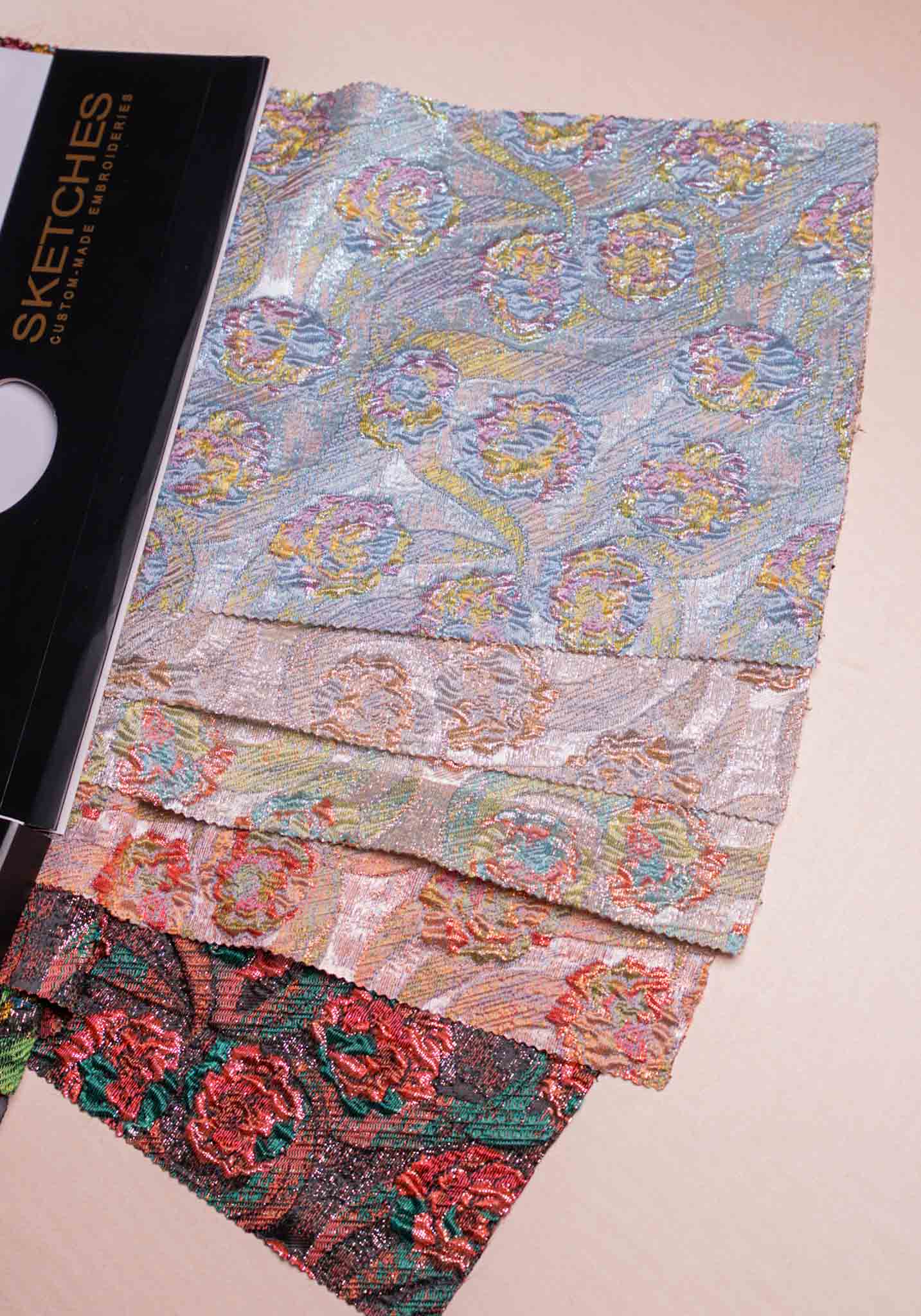
View the fabric at the scale of a full garment panel. A woven motif can appear different across a broad skirt, a narrow sleeve and a fitted bodice, so compare these areas before selecting the layout. Ask for the repeat dimensions if matching across seams is part of the design.
Discuss the reverse side, seam allowance and edge finishing with your maker. A trial seam will help establish a suitable finish without assuming that every jacquard behaves the same way. Check the direction of the metallic effect before cutting paired pieces, especially where the light catches the woven surface differently.
Reviews
There are no reviews yet.