
What is Bridal Fabric?
Bridal fabric is a specialized category of premium textiles created exclusively for bridal gowns. These fabrics are carefully developed to meet the unique structural and aesthetic demands of wedding dress design.
They are distinguished by their balanced weight, purity of fibers, and refined texture qualities that allow the gown to hold intricate constructions such as internal corsetry and sculpted bodices while maintaining comfort and elegance.
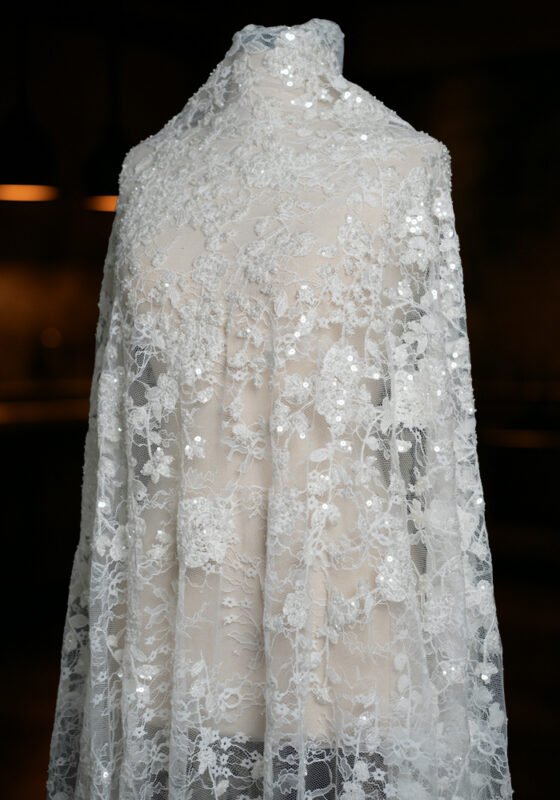
Bridal fabrics are also selected for their exceptional ability to interact with light. Whether under natural daylight or professional photography, they are designed to reflect beautifully, enhancing every detail, fold, and silhouette.
More than just a material, wedding fabric forms the foundation of the gown supporting its structure, elevating its design, and ensuring it looks flawless from the ceremony to the final photograph.
- Bridal Tip
Always choose your fabric before finalizing the dress silhouette.
The fabric determines how the gown will fall, move, and hold its shape. A structured satin creates a defined silhouette, while soft tulle or lace offers a lighter, more romantic look.
Read also: Couture Fabric: All you need to know
Your Guide to choose your bridal Fabric
1. The Structure (Architecture)
Bridal materials are the “bones” of the gown. Some are rigid and supportive, while others are flexible.
High Structure: Fabrics such as Mikado and Dutchess Satin act as soft armor. They conceal undergarments and include sharp, dramatic shapes (such as a structured bow or pleated ballgown).
Low Structure: Fabrics such as Silk Crepe or Chiffon flow and adhere to the body’s curves.
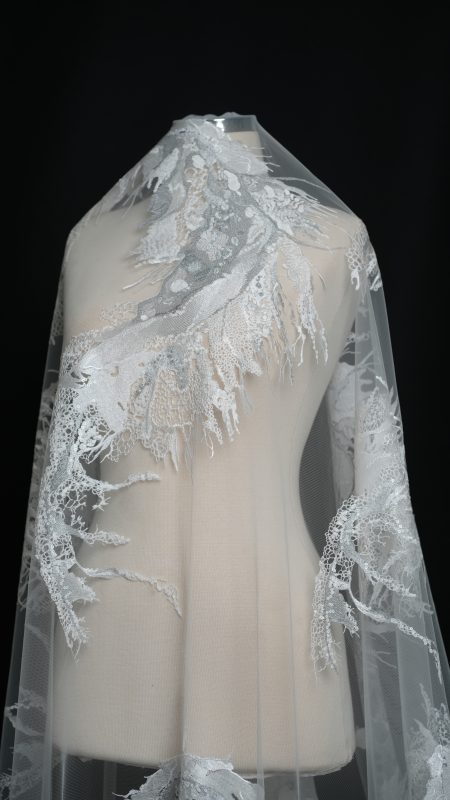
2. The Lustre (Light)
The way a cloth responds to a camera flash or sunshine is critical.
High Shine: Traditional satins reflect light brightly, giving them a characteristic “glow.”
Matte: Modern crepes and cotton laces absorb light, resulting in a flat, refined texture that seems “expensive” and simple.
Iridescent: Taffeta or organza may shift hues subtly when the bride moves.
3. Hand (Feel)
In the industry, we refer to the feel of the cloth as “hand.” Bridal fabrics frequently use higher thread counts and natural fibers (such as 100% Mulberry Silk) to keep the wearer from overheating and the fabric feeling pleasant against the skin for 10+ hours.
2- Bridal tip
Always test the fabric under natural and indoor lighting before making your final choice.
Embroidered bridal fabrics with beads, sequins, and 3D floral can look very different depending on the lighting. Natural daylight highlights texture and detail, while evening lighting enhances sparkle. Make sure the fabric reflects the exact mood you want for your wedding setting.
Bridal Fabrics: The Defining Trend of 2026
Bridal fashion in 2026 embraces fabrics adorned with 3D floral details, adding depth, artistry, and visual impact to wedding gowns. At our factory, we design modern, innovative, and unexpected fabrics that elevate aesthetics and create truly captivating designs. Understanding the different types of wedding fabrics is essential to achieving the stunning look every bride dreams of. That’s why we offer a comprehensive guide, enriched by the expertise of bridal fabric specialists, featuring essential tips for choosing the perfect fabric and a detailed glossary explaining each type with clarity and precision.
Read also: What is Jacquard Fabric?
Discover the First Fabric in Our Collection
Bridal Fabric: Embroidered fabrics crafted on delicate tulle or lace bases, enhanced with intricate beadwork, 3D floral details, and shimmering sequins for a refined and luxurious finish.
Embroidered fabrics on tulle or lace are among the most sought-after materials in bridal fashion due to their delicate elegance and ornamental beauty. These fabrics are characterized by:
- Tulle is a very fine, soft netting that adds ethereal volume without weight perfect for veils, skirts, and layers.
- Lace is open-work fabric with decorative patterns woven directly into the material, offering timeless romantic appeal.
Together, these bases provide a beautiful canvas for embellishment while remaining soft and breathable for the bride.
Exquisite Embroidery
Designers use advanced embroidery techniques to add artistic detailing that makes each piece unique:
- Delicate threadwork that outlines floral and ornamental motifs
- Textured stitching for depth and visual interest
- Embroidery that integrates seamlessly into the base for a refined finish
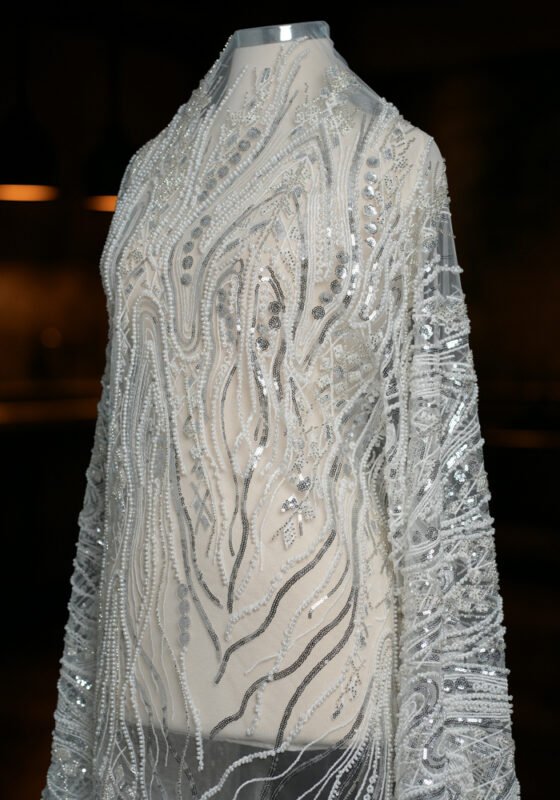
Beadwork and Sequins:
Beads and sequins are added to the embroidered fabric to enhance shimmer and dimension:
- Seed beads and pearl-like beads create subtle glow and luxury
- Sequins add sparkle under light, ideal for evening and indoor weddings
- Placement is carefully planned so that the embellishment enhances the silhouette and does not overwhelm the garment
Trend-Driven 3D Floral Details
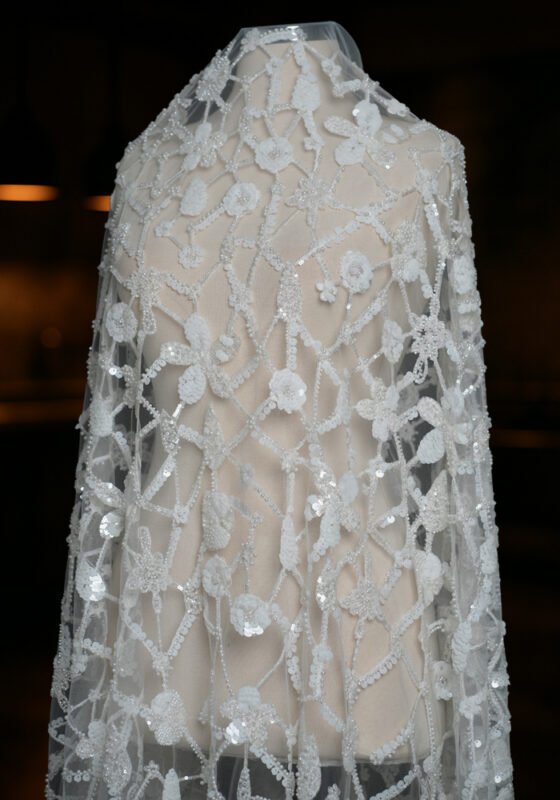
3D embroidery is one of the hottest bridal trends, especially in 2026 because it gives the fabric:
- Depth and movement, as petals and shapes rise from the surface
- A sculptural, artistic look that feels couture-inspired
- A modern yet romantic aesthetic that stands out in photos
These floral appliqués can be soft and delicate or bold and dramatic, depending on the overall design concept.
Versatility in Design
This fabric works beautifully across many styles:
- Classic ball gowns with layers of tulle
- Mermaid and sheath dresses where embellishment follows the body line
- Veils and overlays that complement the main gown
- Statement pieces that make every bride feel unique
Why Brides & Designers Love It
- Adds luxurious texture and depth
- Looks stunning in photos and natural light
- Works for both traditional and modern bridal aesthetics
- Elevates simple silhouettes with artistic detailing
Discover: Bridal Fabrics
3- Bridal tip
Always order fabric swatches before committing to a full roll of fabric. Colors like “Ivory,” “Champagne,” and “Eggshell” look vastly different depending on the textile’s weave and lighting.
Conclusion: Where Your Dream Dress Begins
Bridal fabric is not simply a detail in the design process it is the foundation of the entire gown. In 2026, as bridal fashion embraces structure, dimension, luminous textures, and couture-inspired 3D artistry, fabric becomes the defining element that shapes silhouette, movement, and presence.
From architectural satins to ethereal tulles adorned with intricate embroidery and sculptural florals, the right fabric transforms a vision into reality. It determines how the dress feels against the skin, how it moves with every step, and how it captures the light in each unforgettable photograph.
Choosing your bridal fabric is choosing the mood, the structure, and the story of your gown. Because before the silhouette is finalized and before the details are perfected, it is the fabric that gives the dress its life, its elegance, and its lasting impression.