
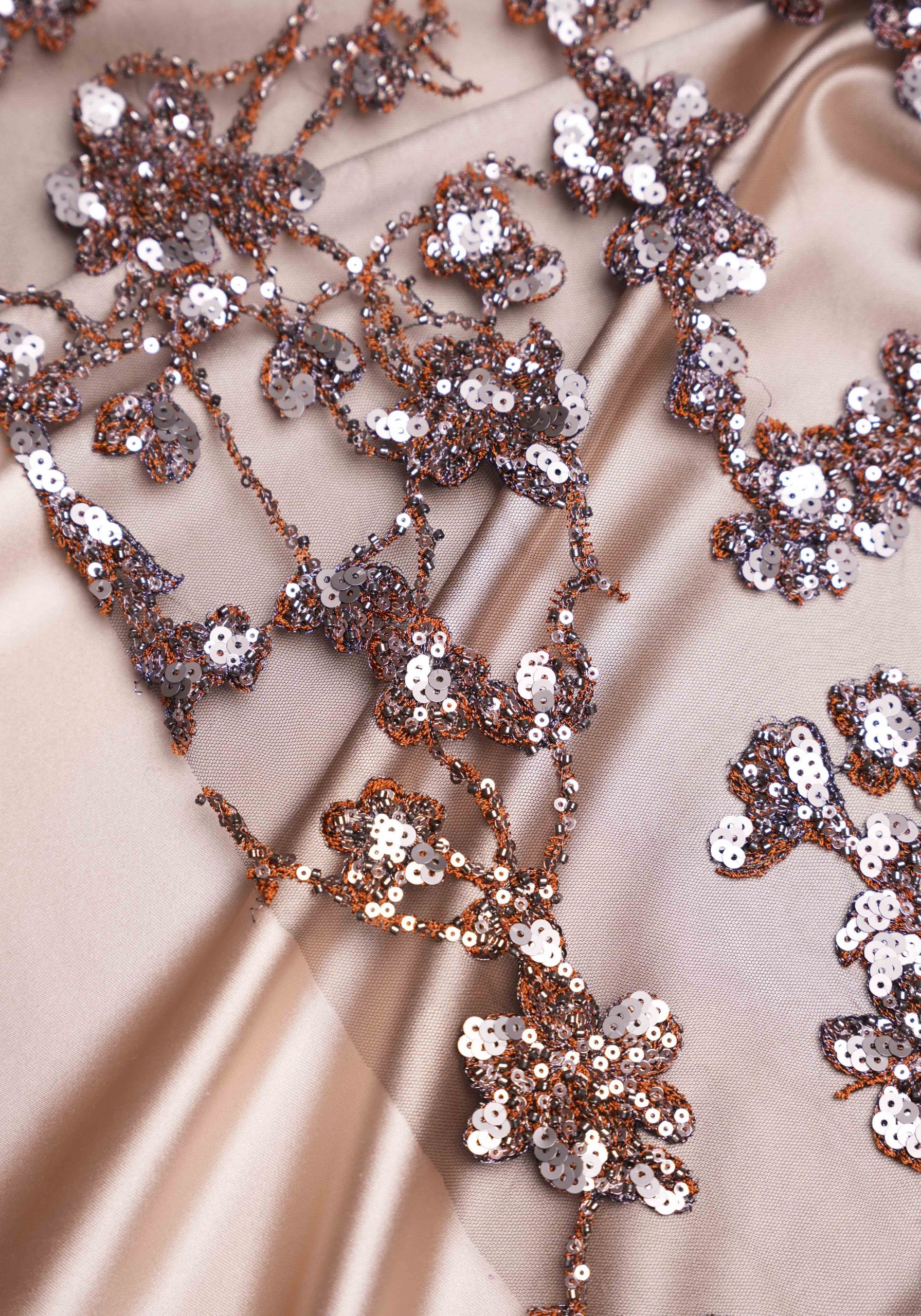
Beaded Jacquard in the Couture World
Beaded Jacquard is regarded as the pinnacle of luxury in the world of couture. It is a complicated geometric fabric that blends the inventiveness of ‘jacquard’ weaving, elevated patterns into the fabric’s basic structure, with the sparkle of precise hand ’embroidery’ with beads and crystals that precisely follow those patterns. This type of fabric has a strong structure and an ideal weight, giving high-end designs regal stability and three-dimensional visual luxury, making it the first choice for Haute Couture designers when creating pieces that require a combination of woven fabric durability and luxurious embroidery details that reflect light with every movement. If Jacquard is a ‘thread-painted canvas,’ then Beaded Jacquard is a ‘jeweled canvas,’ making it the first choice for designers looking for a distinct luxury.

Why is it regarded as one of the most sumptuous ‘couture’ materials?
This cloth has a unique place in ‘Haute Couture’ for the following reasons:
- High craftsmanship: Beads are frequently stitched by hand at big fashion companies, which takes hundreds of hours.
- Production costs: Jacquard threads (such as natural silk or gold and silver threads) are costly, and adding beads boosts their artistic and material worth.
- Play with light: The combination of the jacquard thread’s shine and the dazzle of beads produces a changing light effect with body movement known as “moving luxury effect.”
Read also: What is couture fabric? A complete guide
Why do designers rely on Beaded Jacquard in couture?
Designers use Beaded Jacquard as a significant material in couture designs for a variety of technical and aesthetic reasons, making it a’signature’ of luxury:
- Inherent luxury and precise details: The cloth is not simply embroidered; the base (jacquard) is woven with intricate, creative motifs. This mix of rich material and extra embroidery results in a double layer of features that cannot be duplicated with plain textiles, giving the design instant visual depth.
- 3D Effect: The elevated jacquard threads and the interweaving of beads and crystals on top of them give the fabric tangible dimensionality. This effect transforms the dress into a sculpted artwork that reacts with light and shadow, giving the design life even while static.
- Embodiment of great craftsmanship (savoir-faire): Choosing this material demonstrates the house’s expertise in working with textiles that demand precise cutting and sewing. Embroidery on jacquard necessitates manual alignment of the beads and original patterns, emphasizing the “high craftsmanship” that differentiates Haute Couture from quick fashion.
- Ideal for exclusive pieces (Limited Editions): Because it is impossible to produce vast amounts of jacquard embroidery with the same perfection, the designer can provide extremely exclusive items. This material protects the client’s uniqueness, as it is difficult to recreate the same fabric and embroidery with the same quality in mass manufacturing, increasing the piece’s worth as a unique artistic investment.
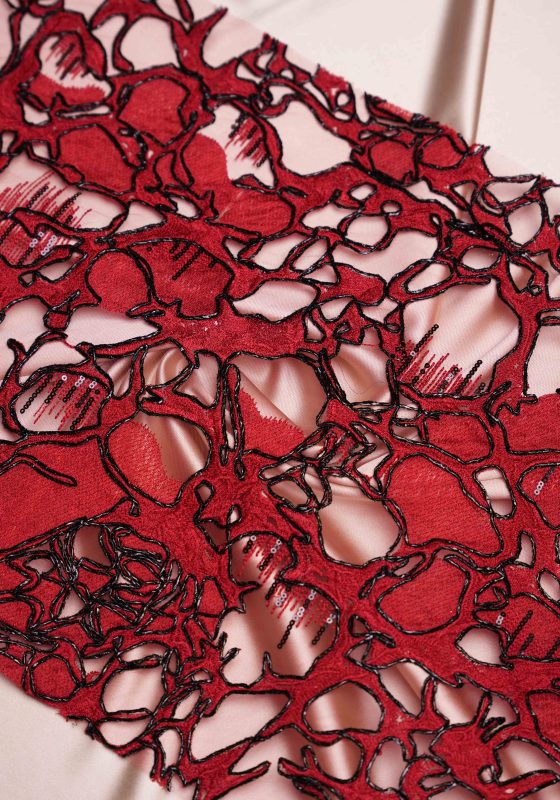
How can designers weave beads into jacquard fabrics?
Beads are integrated with jacquard fabrics using a precise artistic process that begins with weighing the options between hand embroidery, which adds an exclusive touch and intricate details, and advanced mechanical embroidery, which ensures accuracy and consistency; designers intelligently distribute the beads between a dense pattern that highlights the design’s features and a lighter pattern that allows the beauty of the jacquard fabric to shine through.
This integration goes beyond decoration and includes combining luxurious materials like silk and metallic threads with the beads to create a harmonious sparkle, as well as paying close attention to weight and final shape to ensure that the fabric retains its drape and regal structure without being burdened by the embroidery, resulting in a balanced artistic piece that combines structural stability with the luxury of details.
The most popular applications of Beaded Jacquard in couture designs
Beaded Jacquard’s artistry is demonstrated in its capacity to transform any design into an iconic piece on the runways, and one of its most prominent applications in the world of couture is:
- Luxury Evening Dresses: It is considered the first choice for dresses that require a dramatic character and a clear (structured) shape; it allows the designer to create large, voluminous skirts that retain their shape, with the sparkle of beads eliminating the need for excessive accessories.
- Wedding Dresses: It is utilized in royal wedding gowns to create a look that combines traditional and modern elements. Jacquard fabric embellished with pearls or crystals provides the bride with a sumptuous ‘antique’ style appropriate for palaces and vast halls.
- High-end Jackets (Couture Jackets): The beauty of this fabric shines through in short jackets or blazers with defined shoulders, where the embroidery highlights the features of the collars and sleeves, transforming the jacket into an autonomous artistic piece that can be combined with even plain apparel.
- Capes & Showpieces: They emerge prominently on the runway in long capes that cascade from the shoulders; the weight of the fabric, along with the thick embroidery, gives the models a magnificent flowing movement, allowing the item to grab the spotlight due to the reflections of light and shadow.
The impact of Beaded Jacquard on the overall design contour
Beaded Jacquard transforms the final design dramatically, playing an important role in adjusting the lighting and shine. The mix of beaded glitter and Jacquard thread waves creates shifting light reflections, giving the fabric extraordinary liveliness. The delicate stitching enhances the original woven textures and patterns, transforming flat motifs into eye-catching pieces. This, in turn, contributes to the creation of a deep sense of three-dimensionality and movement; with each bend of the body, the layers of the fabric appear to move in a rich visual scene that combines the stability of a royal structure with the fluidity of light, giving the piece a dramatic grandeur that traditional fabrics cannot achieve.
Discover our most recent collection of Couture Fabric
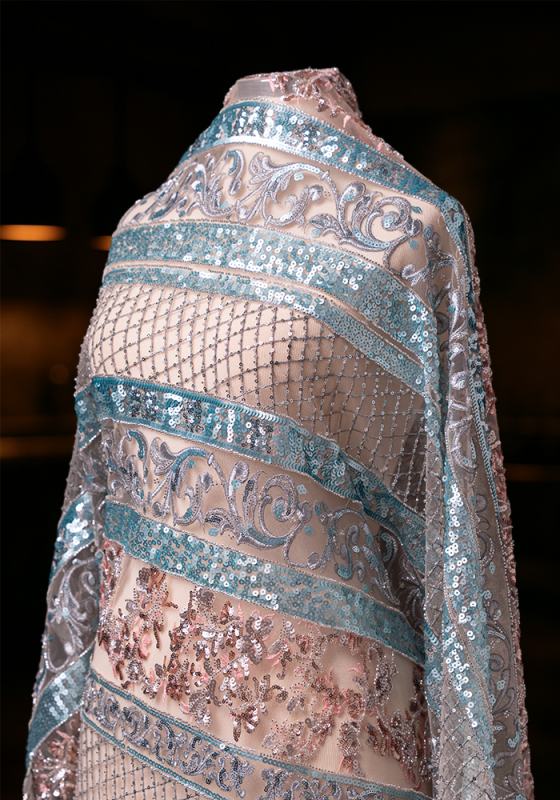
The distinction between beaded jacquard and conventional embroidery in couture
The primary distinction between Beaded Jacquard and traditional embroidery is how the ‘piece’ is constructed from the start, as there is a significant difference in technique and standing in the world of couture:
- Level of complexity:
- Traditional stitching is done on ‘raw’ fabric (such as tulle or satin), so the piece is like a blank page, and the embroiderer begins painting on it.
- Beaded Jacquard: The complexity here is compounded; the cloth itself has geometrically woven patterns, and the embroiderer must follow the routes of the woven threads with pinpoint accuracy. Any error in the distribution of beads might impair the original beauty of the fabric’s pattern, necessitating artistic aptitude and a strong capacity to match the fabric and ornamentation.
- Cost:
- Traditional embroidery costs are mostly determined by the type of beads used and the number of hours of manual labor required.
- Beaded Jacquard: It is the most expensive by far, because you are paying for luxurious “Jacquard fabric” (typically silk or with metallic threads) as well as the cost of expert needlework. Even before a single bead is added, the raw material is considered an investment.
- Time:
- Traditional needlework takes a long time to do manually, but selecting the foundation fabric is easy.
- Beaded Jacquard: Its production process is ‘slow’ at every stage, from designing the jacquard pattern and programming its special looms to the hand embroidery stage that respects the weaving details, resulting in a production cycle of a single dress from this material taking multiples of the usual time.
- Final Result (Luxury Level):
- Traditional embroidery produces a gorgeous and elegant outcome, yet it is still considered an ‘addition’ to the fabric.
- Beaded Jacquard: It produces an ultra-luxurious look; the beads appear to ‘grow’ from inside the fabric’s threads rather than being added. The result is a work with a royal structure, correct weight, and three-dimensional visual depth that conveys opulent richness and craftsmanship that cannot be mechanically or commercially reproduced.
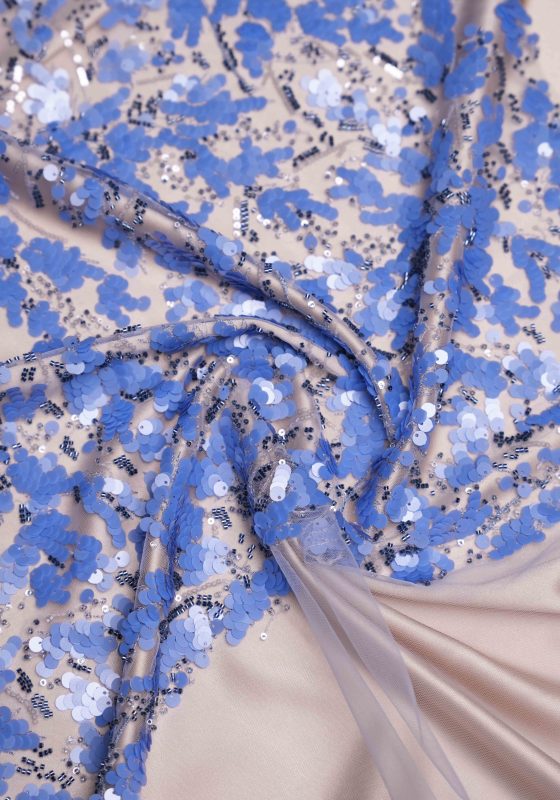
The Future of Beaded Jacquard in Couture
The future of Beaded Jacquard in the world of couture is headed towards innovative horizons that intelligently combine modern technology with authentic craftsmanship, where advanced embroidery techniques, such as 3D printing integrated with fabric or digital looms that allow precise distribution of beads and crystals, are used while maintaining the human touch that gives the piece its distinct soul. The market trend towards sustainable luxury is also evident in the use of recycled jacquard threads and eco-friendly beads without sacrificing brilliance or luxurious texture, ensuring that this material remains a symbol of timeless elegance that respects the environment and keeps up with technological advancement, enhancing its position as an artistic investment that combines the heritage of the past with the aspirations of the future.
How do you select the best design from Beaded Jacquard for your brand?
When selecting Beaded Jacquard designs for your brand, you need to strike a balance between creative value and commercial practicality to guarantee that this rich material supports your brand’s objectives effectively:
- Depending on your target demographic, if your audience is searching for’red carpet’ looks or royal weddings, jacquard with dense and noticeable embroidery is the perfect option, as it conveys instant luxury. However, if your target audience is the elite who appreciate ‘silent luxury,’ pick jacquard with delicate designs and’matte’ bead embroidery in the same color as the fabric to achieve seamless elegance.
- According to budget: Because Beaded Jacquard is one of the most expensive fabrics, you can control the cost by distributing the embroidery; full hand embroidery significantly raises the price and is appropriate for exclusive pieces (Couture), whereas combining skilled machine embroidery with hand touches in specific areas (such as the chest or sleeves) provides an excellent balance between a luxurious appearance and an affordable cost for ready-to-wear luxury lines.
- Based on the brand identity:
- For a timeless look, opt for traditional floral designs (Damask) or symmetrical geometric shapes in pearly beads or clear crystals.
- For a modern identity, pick jacquard with abstract patterns and embroidery with metallic threads or beads of varied sizes for a futuristic look.
- For a bold identity, combine contrasting colors between the jacquard threads and the bead hue, or use large, bright beads against a dark jacquard background to produce a striking visual contrast.
Conclusion
At the end of our journey through the world of Beaded Jacquard, it is clear that this fabric is not just any ordinary material, but the most luxurious visual language in the world of couture; it embodies the ideal balance between the strength of the woven structure and the delicacy of the embroidered details. Designers rely on it not only for aesthetic reasons, but also to invest in great craftsmanship and provide items that defy time due to their three-dimensional depth and shifting sheen. Whether in royal wedding gowns or exclusive pieces on display platforms, beaded jacquard remains the ‘king of fabrics’ that gives brands an unmistakable visual identity, combining the heritage of classical weaving with future techniques, and always remaining the first choice for those seeking absolute luxury and exclusivity.