
Couture fabric represents the pinnacle of luxury textile production, created for high-end, meticulously crafted fashion. Designed with exceptional attention to detail, couture textiles are developed through a combination of refined handwork and advanced precision technology to achieve flawless results.
These fabrics are composed of premium-quality materials, often blending multiple fibers to achieve the perfect balance of strength, softness, and elegance. For example, combinations such as cotton and silk can create a textile that is both durable and delicately refined, offering structure while maintaining a graceful touch.
Couture fabrics are known for their exclusivity and elevated value, as they are typically produced in limited quantities. This rarity contributes to the uniqueness of couture pieces, making each creation feel distinctive and collectible.
What truly define couture fabric are its superior composition, precise construction, and impeccable finishing. Manufactured in small batches using fine threads and specialized weaving or knitting techniques, couture textiles embody craftsmanship, innovation, and uncompromising quality making them the foundation of exceptional, statement-making designs.
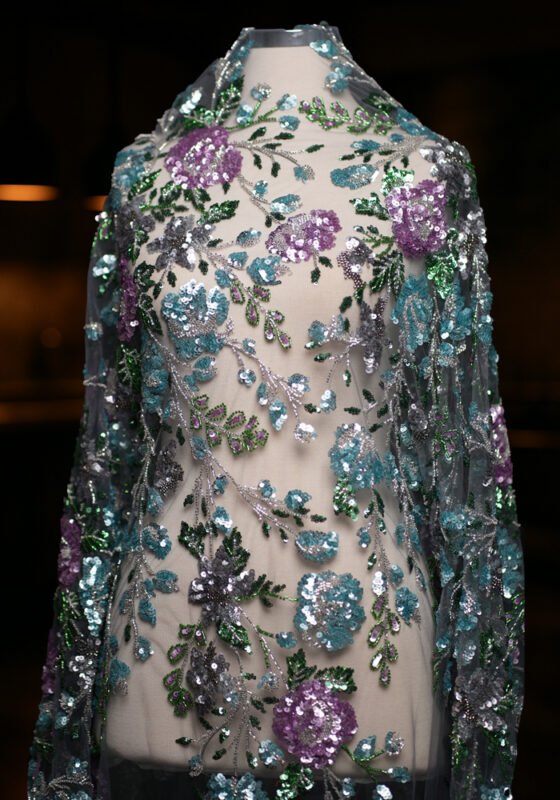
When Do We Use Couture Fabrics?
Couture fabrics are the ideal choice when designing garments that go beyond everyday fashion and are meant to leave a lasting impression. Selecting fine couture textiles elevates any creation with exceptional quality, refined craftsmanship, and a sense of true exclusivity.
For special occasions such as grand celebrations and weddings, couture fabrics are especially powerful. Their luxurious texture and fluid drape allow garments to move gracefully while maintaining an aura of elegance and sophistication. At the same time, their structured composition supports precise tailoring and beautifully defined silhouettes.
Couture fabrics are widely used in wedding gowns, evening dresses, haute couture collections, red carpet designs, and bespoke creations where precision and luxury are essential. Their rich texture, meticulous construction, and impeccable finishing make them ideal for designs that require architectural structure, polished elegance, or intricate artistic detailing.
Designers turn to couture textiles when they want to create limited-edition pieces with distinctive character and personality garments that are not simply worn, but remembered.
- Couture Tip
Couture fabrics are rich in detail and texture, so allow the material to guide the silhouette. To avoid overcomplicating the design, refined cuts highlight the fabric’s artistry.
Discover: A wide collection of Couture Fabrics
The Art of the Intangible: Discovering Couture Fabrics
In the world of haute couture, fabric is never simply a material, it is the heart of the creation. A couture textile carries the legacy of refined craftsmanship, the precision of expert artisans, and the promise of a silhouette waiting to take shape.
When exceptional artistry meets the finest fibers, the result transcends fashion. Couture fabric becomes an experience soft yet structured, delicate yet powerful designed to feel like a natural extension of the wearer.
It is not just what a garment is made from; it is what gives it life, movement, and unforgettable presence.
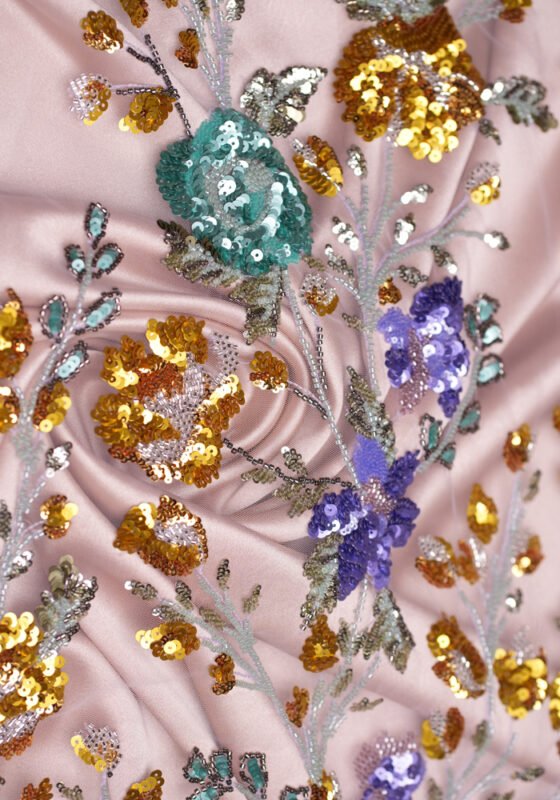
The Elements of Haute Couture: A Fabric Classification
1. Artisan Lace
This is the pinnacle of delicate craftsmanship. More than just a pattern, couture lace features intricate, high-relief designs often hand-finished with shimmering beads, crystals, or three-dimensional appliqués.
- Ideal for: Bridal masterpieces, ethereal overlays, and fine-line detailing.
2. Ornate Embroidered Textiles
Starting with a premium base of silk or gossamer tulle, these fabrics are transformed into wearable art through dense, elaborate needlework and bespoke motifs.
- Ideal for: Red-carpet silhouettes and avant-garde statement pieces.
3. Prestigious Silks
The gold standard of luxury, spanning from the liquid drape of chiffon and satin to the architectural integrity of mikado. These fibers are prized for their natural luminosity and incomparable “hand.”
- Ideal for: Fluid eveningwear, timeless bridal gowns, and high-sheen draping.
Read also: All you need to know about Jacquard fabric
4. Dimensional Couture Tulle
Moving far beyond standard netting, couture tulle is exceptionally soft and serves as a canvas for hand-sewn pearls, 3D floral elements, and tiered textures that create volume without weight.
- Ideal for: Dramatic veils, “cloud” skirts, and illusion necklines.
5. Architectural & Structured Weaves
For designs that require gravity-defying shapes, these high-density textiles—including jacquard, brocade, and heavy duchess satin provide the necessary “body” and crispness.
- Ideal for: Sculptural ball gowns and structured evening bodices.
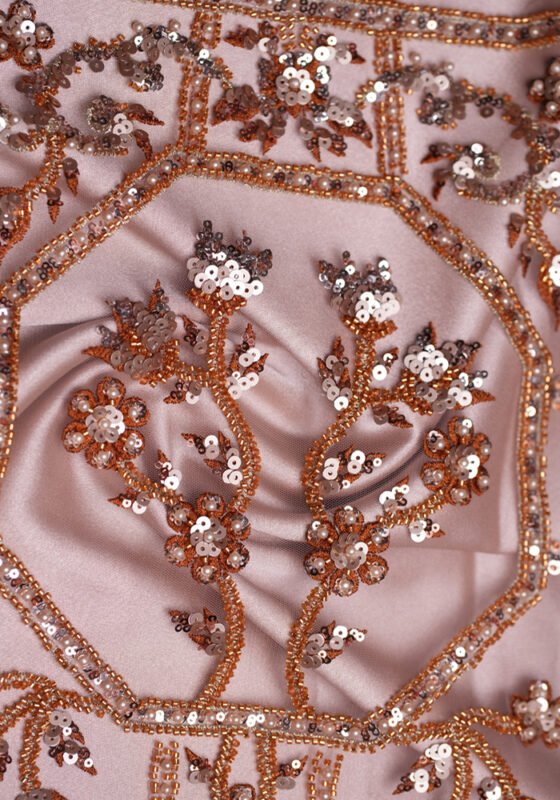
6. Hand-Embellished Masterpieces
These are ultra-exclusive textiles where every sequin, crystal, and seed pearl is applied by hand. Each yard represents hundreds of hours of manual labor, ensuring a unique light-reflective quality.
- Ideal for: One-of-a-kind gala dresses and limited-edition luxury commissions.
7. Eco-Conscious Couture (The 2026 Vision)
The intersection of heritage and innovation. These materials pair traditional natural fibers with cutting-edge sustainable technology to prove that high-fashion brilliance can be ethically sound.Ideal for: Modern, forward-thinking collections that prioritize both planet and prestige.
Couture Fabrics Meet the 2026 Trend
In 2026, fabric trends are evolving toward a refined fusion of haute couture craftsmanship, advanced technology, natural fibers, and sustainable innovation. Luxury couture fabrics embody this shift, combining modern textile development with timeless artistry to create materials that feel both progressive and enduring.
Haute couture has always been a leading force in fashion, introducing bold silhouettes, innovative lines, and new textile techniques that later influence ready-to-wear collections. As a result, couture fabrics are not only exclusive, they set the direction for the industry.
The Spring 2026 season highlights meticulous craftsmanship, fluid softness, sculptural structures, and richly tactile surfaces. These elements define couture textiles this year, shaping garments that emphasize texture, movement, and architectural beauty.
In essence, couture fabrics in 2026 are more than luxurious materials; they are the foundation of fashion’s next chapter, where artistry, innovation, and sustainability come together to define modern elegance.
2- Couture tip
Because couture textiles often have body and weight, ensure the pattern and construction complement the fabric’s structure. Proper tailoring enhances elegance and prevents heaviness.
Couture Fabrics: represents the highest level of craftsmanship in bridal and eveningwear textiles. Typically built on a refined tulle or lace base, this fabric is fully embroidered from edge to edge, creating a rich, seamless design surface. Unlike standard embroidered fabrics, couture fabrics are often developed in custom patterns, exclusive motifs, and limited productions, making them ideal for high-end designers and bespoke bridal collections.
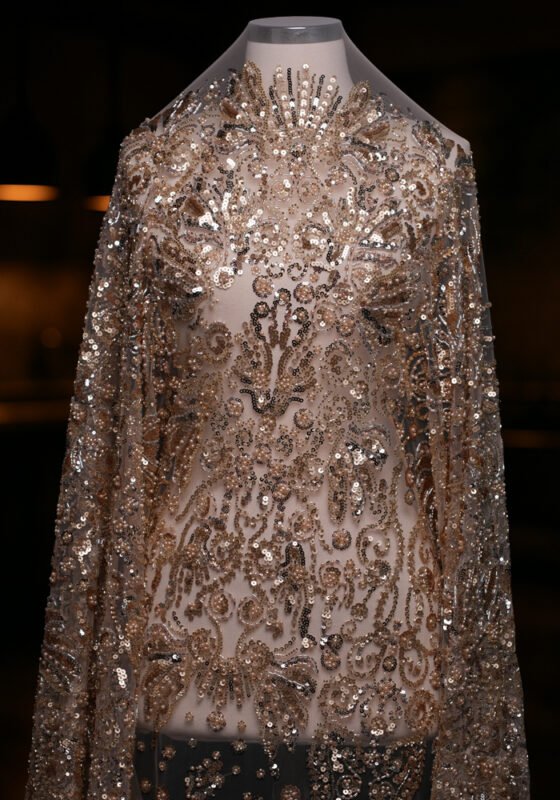
Key Features:
Full-Surface Embroidery: Dense, continuous embroidery that covers the entire base fabric rather than scattered motifs.
Custom Color Options: Available in ivory, off-white, champagne, blushes, nude, and even bold couture tones depending on the designer’s vision.
Made-to-Order Pieces: Supplied in customized cuts, panel placements, or engineered layouts to match specific dress patterns.
Hand-Finished Details: Often enhanced with hand-sewn beads, crystals, sequins, or dimensional appliqués.
Luxury Weight & Structure: Slightly heavier than standard embroidered fabrics due to rich embellishment, giving gowns structure and dramatic fall.
3- Couture tip:
Luxury should feel effortless. Choose couture fabrics that provide graceful flow while maintaining shape, ensuring comfort throughout the event.
Conclusion
Couture fabrics are more than luxurious textiles; they are the soul of exceptional design. From intricate lace and hand-embellished masterpieces to architectural weaves and innovative sustainable materials, each couture fabric carries a story of craftsmanship, precision, and artistry.
In 2026, as fashion moves toward refined textures, sculptural silhouettes, and conscious innovation, couture textiles stand at the forefront shaping not only garments, but the future of high fashion itself.
Choosing couture fabric means choosing intention, exclusivity, and excellence. It is the decision to create pieces that are not simply beautiful, but memorable garments defined by structure, movement, and impeccable finish.
Because in the world of couture, the fabric is not just the beginning of the design it is the masterpiece that brings it to life.